



If you're starting a pizzeria, the pizza oven is the most important investment you'll make. There are five types of commercial pizza ovens: brick, conveyor, deck, convention, and countertop. To help you make an informed purchase, we break down the benefits, average cost, and production volume of each pizza oven category.
Shop All Commercial Pizza OvensWhat Is the Best Commercial Pizza Oven?

Many foodservice professionals agree brick ovens are the best commercial pizza oven model. While it’s natural to want the best commercial pizza oven, you also need to consider your pizza order volume, budget, kitchen size, and the types of pizza you want to make. Use our guide to discover the best commercial pizza oven for your business. Be sure to check out our commercial pizza oven reviews as well.
Different Types of Pizza Ovens
The different types of pizza ovens are distinguished by three main factors: how they operate, how much space they require, and how much they cost. Weigh the benefits and challenges of investing in each of the five types of pizza ovens.
1. Brick Pizza Oven

Designed to cook pizzas evenly, brick pizza ovens circulate heat around the pizza while it bakes. This process, known as radiant heat, cooks pizzas from all sides simultaneously and results in a perfectly cooked crust and toppings. The heating process in a brick pizza oven begins with building a fire inside the oven.
Wood is commonly used as the fuel source because it reaches high temperatures quickly and imparts a distinct smoky flavor to the pizza. The fire heats the bricks in the oven, which then absorb and radiate the heat throughout the cooking chamber. As the fire burns, the bricks in the oven absorb the heat and reach high temperatures, typically between 700 degrees Fahrenheit to 900 degrees Fahrenheit (371 degrees Celsius to 482 degrees Celsius). This intense heat is essential for creating the signature crispy crust and bubbling toppings that brick oven pizzas are known for. The high temperatures also allow pizzas to cook quickly, typically in just a few minutes, making brick ovens a popular choice for busy commercial kitchens.
You can design your brick pizza oven as an outdoor pizza oven. Outdoor pizza ovens offer the same wood-burning, artisan flavors as indoor models but usually take up less space. They’re perfect for pizzerias with attractive patio spaces and they elevate the menu of any wine garden.
- Brick Pizza Oven Pizzas Per Hour - Approximately 80
- Brick Pizza Oven Cook Time - 2-5 minutes
- Brick Pizza Oven Preheat Time - 45-60 minutes
- Brick Pizza Oven Cost - Custom made, so cost varies by contractor, size, and materials
- The Best Types of Pizza to Cook in a Brick Pizza Oven - California-Style, New York, Neapolitan, Chicago, and Sicilian
Brick Pizza Oven Production Volume
Most brick pizza ovens can hold 10-12 pizzas at a time and can fully cook a pizza in less than five minutes. You can avoid heat recovery time by maintaining your brick oven’s fire. Most brick pizza ovens only have one cooking platform which limits their cooking space. They’re a reliable pizza oven for medium-sized operations, but high-volume pizzerias would do well to choose a conveyor oven.
Brick Pizza Oven Dimensions
Most brick pizza oven dimensions range from 150 cubic feet to 400 cubic feet, but they’re custom-designed to fit each location. Brick pizza ovens often reach from floor to ceiling and sit atop bases as large as 30 square feet. Restaurants use brick ovens for both function and presentation. A brick pizza oven serves as a centerpiece attraction and is usually built where customers can watch and appreciate it in action.
Brick Pizza Oven Value
By investing in a brick pizza oven and following a regular maintenance routine, commercial kitchens can enjoy the benefits of superior heat retention, authentic flavor, and long-lasting durability, making it a valuable addition to their cooking equipment lineup. While they may require a higher initial investment compared to other types of pizza ovens, their long-term value and durability make them a worthwhile investment for businesses looking to create authentic and delicious pizzas. Properly constructed brick pizza ovens can last for decades with regular maintenance, making them a cost-effective option in the long run. Their sturdy construction can withstand high temperatures and frequent use.
2. Conveyor Pizza Oven
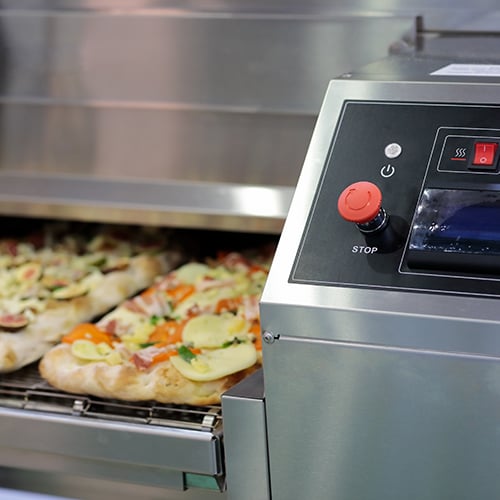
Conveyor ovens are the best option in settings where efficiency is the biggest priority, and you can purchase the gas or electric hookup style your business requires. They churn out pizzas as fast as you can make them on a continuous cooking platform. Place the pizza on the conveyor belt, and the oven does the rest of the work by pulling it through at a set speed. Some models increase production capacity by stacking up to four conveyor ovens on top of each other.
Conveyor ovens can use either convection heat or radiant heat to cook pizzas to perfection. Convection heat in conveyor deck ovens involves the circulation of hot air throughout the cooking chamber, resulting in consistent baking across all pizzas on the conveyor belt. Radiant heat in conveyor deck ovens relies on heating elements such as metal rods or infrared panels to directly heat the pizzas, providing a more intense and focused heat source, which is beneficial for achieving a crispy crust and caramelized toppings.
- Conveyor Deck Pizza Oven Pizzas Per Hour - 75-100 per deck
- Conveyor Deck Pizza Oven Cook Time - 4-5 minutes
- Conveyor Deck Pizza Oven Preheat Time - 10-15 minutes
- Conveyor Deck Pizza Oven Cost - $5,000-$30,000
- The Best Types of Pizza to Cook in a Conveyor Deck Pizza Oven - New York and Neapolitan
Conveyor Deck Pizza Oven Production Volume
Each deck on a large conveyor oven produces approximately 100 pizzas an hour. Medium-sized conveyor deck ovens typically produce 75 pizzas per deck each hour. It takes conveyor deck ovens four to five minutes to cook a pizza. Because the pizzas are passing under or through the constant heating elements, there is no time lost for heat recovery.
Conveyor Deck Pizza Oven Dimensions
Conveyor deck pizza oven dimensions range from 100 cubic feet to 180 cubic feet, and most are wide enough to fit two large pizzas side by side. Restaurants need a lot of floor space to house a conveyor oven and accommodate the extended conveyor belts at their entrance and exit. A single-stack conveyor oven requires up to 150 cubic feet (about half the volume of a storage unit), while triple-stack ovens often take over 330 cubic feet (about the volume of a storage unit) of floor space.
Conveyor Deck Oven Value
With prices ranging from $5,000 to $30,000, conveyor deck pizza ovens provide a cost-effective solution for businesses of all sizes. The automated conveyor system eliminates the need for constant monitoring and rotating of pizzas, requiring minimal training for staff members. It also allows staff to focus on other tasks while pizzas are being cooked. By following a regular maintenance schedule, you can prevent breakdowns, reduce energy consumption, and maintain the quality of your pizzas. Professional servicing can help prolong the lifespan of your conveyor deck pizza oven and prevent costly repairs.
3. Pizza Deck Oven
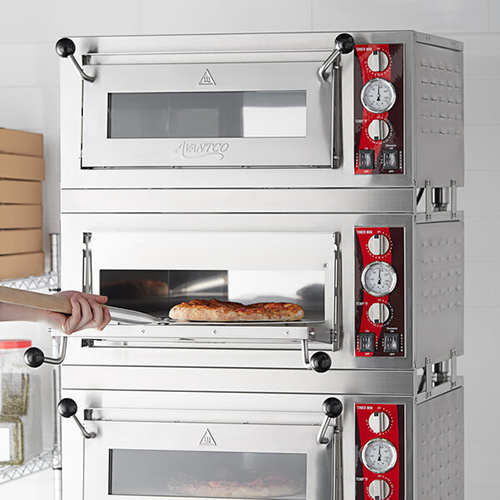
Pizza deck ovens ovens are known for their ability to produce pizzas with a crispy crust and a well-cooked interior. Because their hot stone decks directly heat the pizza crust, cooking the dough completely without charring the toppings, they are ideal for cooking pizza pies. These ovens employ a combination of radiant heat and conduction to cook pizzas evenly and efficiently.
Radiant heat is the primary source of cooking in a pizza deck oven. The oven's deck - typically made of stone or ceramic material - absorbs and retains heat, which is then transferred directly to the pizza crust. This radiant heat helps create a crispy and evenly cooked crust, giving the pizza that signature brick-oven flavor. Conduction is another important element in the cooking process of a pizza deck oven. As the pizza sits on the deck’s hot surface, conduction heat is transferred from the deck to the bottom of the pizza, ensuring that the crust cooks evenly and thoroughly.
- Pizza Deck Oven Pizzas Per Hour - Approximately 50 pizzas per deck
- Pizza Deck Oven Cook Time - 6-8 minutes
- Pizza Deck Oven Preheat Time - Approximately 60 minutes
- Pizza Deck Oven Cost - $5,000-$30,000
- The Best Types of Pizza to Cook in a Pizza Deck Oven - New York, Chicago, Sicilian, and Neapolitan
Pizza Deck Oven Production Volume
On average, each pizza deck holds four to six pizzas and produces 50 pies an hour. Baking times range between six and eight minutes. Pizza deck ovens are not a hands-off cooking method. Your staff will need to monitor the pizzas while they cook and move them around, so you may lose time to heat recovery and run out of space. Some models overcome the inherent lack of cooking space by offering multiple stacked decks. Pizza deck ovens can have anywhere from one to six decks.
Pizza Deck Oven Dimensions
Pizza deck oven dimensions range from 100 to 180 cubic feet They’re ideal for medium-sized pizzerias since a high-capacity, four-deck oven requires approximately 160 cubic feet of space. While their overall size rivals conveyor ovens, pizza deck ovens have stacked designs that require more vertical space than horizontal.
Pizza Deck Oven Value
Deck ovens are a great long-term investment because they last many years, even decades, and hold their resale value. They're versatile and can be used to bake a variety of other menu items in addition to pizzas, making them a valuable investment for any foodservice establishment. Maintaining a pizza deck oven is easy, just scrub burn marks on the decks and wipe down the outside. Since they have no moving parts, pizza deck ovens rarely require professional repairs.
Back to Top
4. Convection Pizza Oven
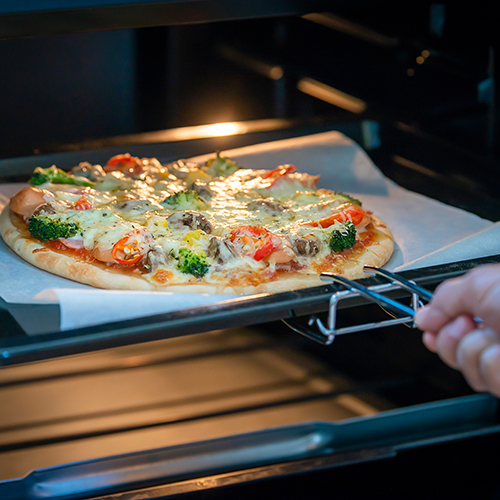
Commercial pizza convection ovens circulate hot air, cooking every side of the pizza at once. Convection pizza ovens are a popular choice for commercial kitchens due to their ability to cook pizzas quickly. Convection ovens work by using a fan to distribute the heat, resulting in shorter cooking times compared to traditional ovens. The circulating air also helps to eliminate hot spots, ensuring that every part of the pizza cooks at the same rate.
Convection ovens are a great choice for busy pizzerias looking to increase their output without sacrificing quality. The high heat and circulating air in a convection pizza oven help achieve the desired crispy texture of the crust while ensuring that the toppings are cooked evenly. In addition to cooking pizzas quickly and evenly, convection ovens can cook pizzas in less time than traditional ovens, saving both time and energy costs.
- Convection Pizza Oven Pizzas Per Hour - Approximately 40 pizzas per chamber
- Convection Pizza Oven Cook Time - 5-6 minutes
- Convection Pizza Oven Preheat Time - 15-20 minutes
- Convection Pizza Oven Cost - $1,000-$10,000
- The Best Types of Pizza to Cook in a Convection Pizza Oven - New York and Neapolitan
Convection Pizza Oven Production Volume
On average, convection pizza ovens produce 40 pizzas per chamber each hour. Most models have two to five racks per chamber and can fit one or two 16" pizzas on each rack. It usually takes a convection oven five to six minutes to cook one pizza. Cook times vary depending on the temperature and the number of pizzas in the oven. You will lose some heat when you open the door to remove your pizzas, but most convection ovens counter this effect and minimize heat recovery time. Commercial convection ovens are best suited to restaurants that want pizza as a menu option but aren’t pizza-focused.
Convection Pizza Oven Dimensions
Most convection pizza ovens require 15 to 60 cubic feet, making them the ideal choice for restaurants with limited space. Some convection pizza ovens have a narrow width and an elevated height to reserve precious floor space for other pizza shop equipment and storage.
Convection Pizza Oven Value
Ranging in price from $1,000-$10,000, convection pizza ovens are the least expensive to purchase and maintain, making them an ideal choice for restaurants that want to offer pizza on their menu, but are not pizzerias. Using a pizza stone in a convection oven simulates the results of a brick pizza oven. By cleaning the inside daily and the intake fan weekly, you can cut down on replacement or repair costs.
5. Countertop Pizza Oven
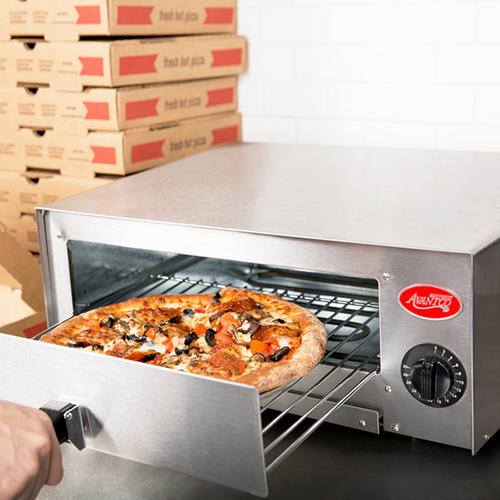
You can save money and space by purchasing a countertop version of convection, conveyor, and deck ovens. While the number of pizzas a countertop pizza oven makes per hour varies widely by oven type, they all produce fewer pizzas than their full-sized counterparts. The ideal pizza to make in a countertop pizza oven depends on the type of heat it uses. They are great for quickly heating frozen pizzas. These ovens typically feature adjustable temperature settings and quick preheating times, allowing you to efficiently heat frozen pizzas without compromising on taste or texture.
Most countertop pizza ovens are electric, so you can install them anywhere there is an electrical hookup or outlet. Not only do countertop pizza ovens save floor space, but you can also stack them on top of each other or other pieces of equipment to save valuable countertop space. They are the ideal choice of equipment for food trucks and concession stands.
- Types of Countertop Pizza Ovens - Convection, conveyor, and deck
- Countertop Pizza Oven Cook Times - Countertop pizza ovens yield compatible cook times to their full-sized versions
- Countertop Pizza Oven Preheat Time - Approximately 12 minutes but varies by oven style
- Countertop Pizza Oven Cost - $100-$11,000
- The Best Types of Pizza to Cook in a Countertop Pizza Oven - New York, Neapolitan, Heating Frozen Pizza
Countertop Pizza Oven Production Volume
The production volume of countertop pizza ovens varies depending on the cooking style and specifications of the oven. On average, a countertop pizza oven can produce between 30 and 60 pizzas per hour, making them ideal for establishments such as non-pizzerias and convenience stores looking to serve a moderate volume of pizzas to their customers. These ovens are designed to be compact and efficient, making them a versatile option for businesses with limited space or those looking to add pizza to their menu offerings.
Countertop Pizza Oven Dimensions
The dimensions of a countertop pizza oven typically include the width, depth, and height. The width of these ovens can range from 18 inches to 36 inches, allowing you to choose a size that fits your available countertop space. The depth of countertop pizza ovens can vary from 16 inches to 30 inches, giving you options based on the depth of your countertops and the size of the pizzas you plan to bake. Additionally, the height of these ovens can range from 8 inches to 20 inches, which is important to consider if you have overhead cabinets or limited vertical space in your kitchen.
Countertop Pizza Oven Value
Countertop pizza ovens are a cost-effective solution for businesses that want to offer pizza without investing in a full-size pizza oven. These units are typically more affordable upfront and require less maintenance, making them a budget-friendly option for businesses looking to expand their menu offerings. These compact units are designed to sit conveniently on a countertop, making them ideal for small kitchens or food trucks. Despite their smaller size, countertop pizza ovens are capable of producing delicious pizzas with quick cooking times.
Comparison Chart of Pizza Oven Efficiencies
| Oven Type | Pizzas Produced / Hour | Size | Cost | Heating Method | Preheat Time | Cooking Time | Operator Skill Level |
|---|---|---|---|---|---|---|---|
| Convection | 40 / chamber | 15 ft3-60 ft3 | $1,000-$10,000 | Convection heat | 15-20 minutes | 5-6 minutes | Low |
| Conveyor | 80 / belt | 150 ft3-300 ft3 | $5,000-$30,000 | Convection or radiant heat | 10-15 minutes | 4-5 minutes | Low-Medium |
| Deck | 50 / deck | 100 ft3-180 ft3 | $5,000-$30,000 | Conduction and radiant heat | 60 minutes | 6-8 minutes | Medium-High |
| Brick | 80 / deck | 150 ft3-400 ft3 or more | Largely varies by contractor, size, materials, and aesthetic design | Convection, reflection, and conduction heat | 45-60 minutes | 2-5 minutes | High |
The Best Oven for Each Style of Pizza
| Oven Type | Pizza Style | Topping Level | Crust Thickness |
|---|---|---|---|
| Convection | New York and Neapolitan | Light and Medium Toppings | Thin and Medium Crusts |
| Conveyor | New York and Neapolitan | Light and Medium Toppings | Thin and Medium Crusts |
| Deck | New York, Neapolitan, Chicago, and Sicilian | Light and Heavy Toppings | All Crusts |
| Brick | California-Style, New York, Neapolitan, Chicago, and Sicilian | Light and Heavy Toppings | All Crusts |
Back to Top
By taking your operational needs and financial requirements into consideration, you can find the best commercial pizza oven for your business. Whether you need a steady stream of pizzas or want to diversify your menu with a couple of pies, there is an ideal pizza maker for your needs. Once you start churning out pies, check out our pizza box sizing guide to find the appropriate packaging.